
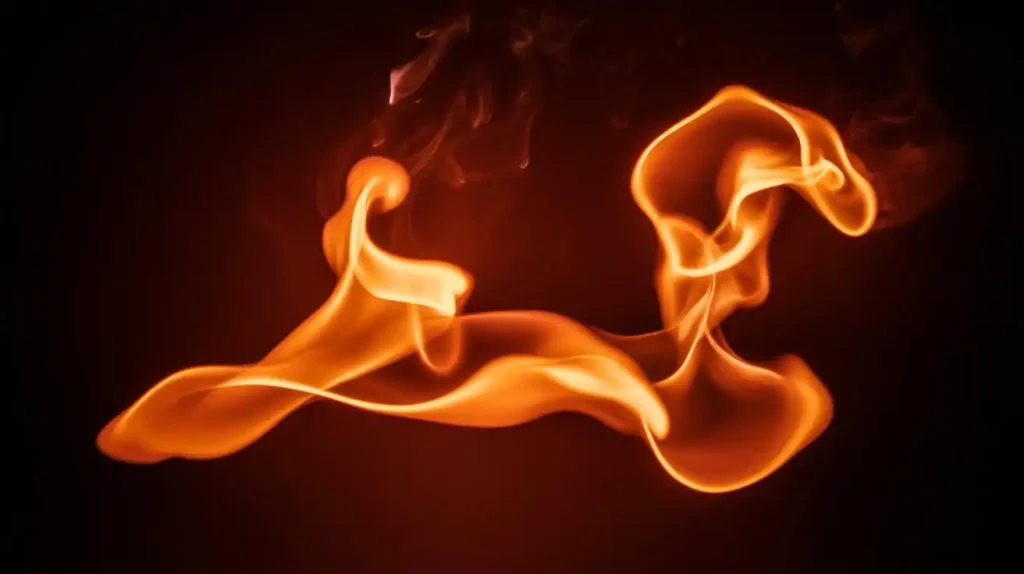
Fire is often seen as a simple and familiar phenomenon, yet it hides a surprising level of complexity. From its unusual behavior in different environments to its dependence on chemistry and physics, fire can act in ways that challenge common expectations. Exploring these facts reveals just how dynamic and unpredictable it truly is.
The Science Behind Fire
- Fire is not a solid, liquid, or gas but a chemical reaction known as combustion.
- Flames can appear in different colors depending on the temperature and the materials being burned.
- Blue flames are typically hotter and indicate more complete combustion than orange ones.
- Fire needs three elements to exist: heat, fuel, and oxygen, often called the fire triangle.
- Removing any one of these elements will cause the fire to extinguish.
Unusual Behaviors of Fire
- Fire can move against gravity under certain conditions, especially in controlled environments.
- In zero gravity, flames become spherical instead of rising upward.
- Fire can create its own wind by heating the surrounding air and causing it to rise.
- Some fires can spread silently and invisibly, such as certain gas fires.
- Fire whirls, sometimes called fire tornadoes, can form under intense heat and wind conditions.
Fire in Different Environments
- In space, fire burns slower and cooler due to the lack of convection.
- Underwater, special chemical reactions can produce flames that appear to burn beneath the surface.
- Certain metals, like magnesium, can burn with intense brightness even in unusual conditions.
- Forest fires can jump across gaps, carried by embers through the air.
- In extremely cold conditions, fire can still burn if fuel and oxygen are present.
Surprising Fire Phenomena
- Fire can produce sound waves and even low-frequency vibrations under certain conditions.
- Some organisms, like certain fungi, can glow faintly due to chemical processes related to combustion-like reactions.
Conclusion
Fire is far more than a simple source of heat and light. Its behavior changes dramatically depending on its environment and conditions, revealing a complex interplay of physics and chemistry. The more closely you examine fire, the more it defies expectations and deepens your understanding of the natural world.