
Mirrors seem simple at first glance, reflecting the world exactly as it appears. Yet behind that familiar surface lies a range of strange and often misunderstood behaviors. From physics to perception, mirrors reveal surprising truths about light, space, and the human mind.
The Science of Reflection
- Mirrors reflect light at the same angle it arrives, following a precise physical rule.
- What you see in a mirror is not reversed up and down but flipped left to right due to perspective.
- A perfect mirror would reflect nearly all light, but real mirrors absorb a small portion.
- Most mirrors are made by coating glass with a thin layer of metal like aluminum or silver.
- Reflections happen almost instantly because light travels extremely fast.
Perception and Illusion
- You never actually see yourself exactly as others do because mirrors reverse your image.
- Your brain adjusts to your mirror image, making photographs sometimes feel unfamiliar.
- Mirrors can create the illusion of depth even on flat surfaces.
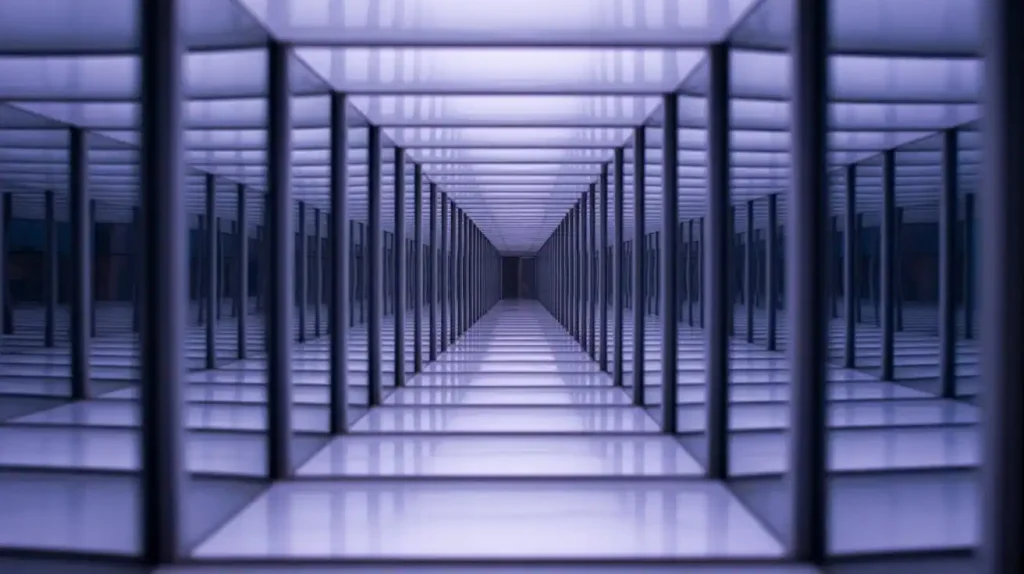
- Two mirrors facing each other can produce an effect that appears like an infinite tunnel.
- Small distortions in mirrors can subtly alter how objects appear.
Strange Mirror Effects
- A mirror in darkness reflects nothing because there is no light to bounce back.
- Curved mirrors can make objects look larger, smaller, or even upside down.
- Some mirrors can focus light into a single point, generating intense heat.
- Funhouse mirrors exaggerate reflections by bending the surface in irregular ways.
- Under certain conditions, mirrors can create optical illusions that trick the brain into seeing movement.
Mirrors and Physics
- Mirrors do not actually swap left and right; they reverse front and back relative to you.
- Light reflecting from a mirror undergoes a phase shift that is invisible to the eye.
- Extremely precise mirrors are used in scientific instruments to detect tiny changes in space.
- A mirror reflection is always slightly delayed, though the delay is far too small to notice.
- If you could see light traveling slowly, you would observe reflections forming over time.
Unusual Mirror Concepts
- There are theoretical mirrors that could reflect all wavelengths, including those we cannot see.
- Some animals can recognize themselves in mirrors, while others cannot.
- A two-way mirror works by balancing reflection and transparency depending on lighting.
- Mirrors can influence how people perceive space, often making rooms feel larger.
- In certain lighting, mirrors can create ghost-like images due to multiple reflections.
Conclusion
Mirrors are far more complex than their everyday use suggests. They blend physics, perception, and illusion in ways that continue to puzzle and fascinate. The next time you look into a mirror, you may realize you are seeing more than just a reflection.