
Nature is full of patterns and structures that often go unnoticed. From the smallest crystals to vast landscapes, shapes play a key role in how the natural world is formed and organized. These fascinating facts reveal the hidden geometry that surrounds us every day.
The Geometry of Nature
- Many natural shapes follow mathematical patterns such as symmetry and repetition.
- Circles and spheres are common because they distribute energy and pressure evenly.
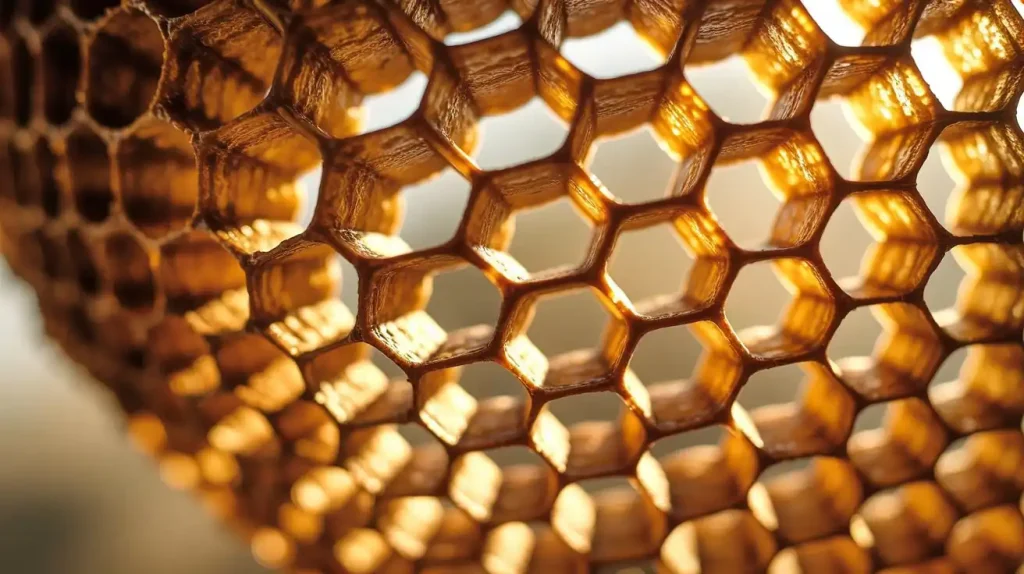
- Hexagons appear frequently in nature due to their efficiency in filling space.
- Spirals often follow the Fibonacci sequence, seen in shells and plants.
- Fractals are patterns that repeat at different scales, creating complex designs.
- Triangles provide strength and stability, making them common in natural structures.
- Waves form repeating curved shapes influenced by energy and motion.
- Crystals grow in precise geometric patterns based on molecular arrangement.
Shapes in Plants and Animals
- Leaves often grow in spiral patterns to maximize sunlight exposure.
- Honeycombs are made of hexagons to store the most material with the least wax.
- Animal markings often form stripes, spots, or other repeating shapes.
- Spider webs are built using radial and spiral patterns.
- Pinecones display overlapping spirals that follow consistent numerical patterns.
- Shells grow in expanding curves that maintain their shape over time.
- Some flowers form nearly perfect circular or radial designs.
- Animal horns and tusks often curve in smooth arcs as they grow.
Unexpected Natural Shapes
- River networks branch like tree limbs, forming fractal-like structures.
- Lightning creates jagged, branching patterns across the sky.
- Sand dunes form smooth, wave-like ridges shaped by wind.
- Snowflakes develop intricate symmetrical patterns unique to each crystal.
- Clouds can form layered, rounded, or towering geometric shapes.
- Cracked mud often forms polygonal patterns as it dries.
- Bubbles naturally form spheres due to surface tension.
- Some rocks naturally split into geometric shapes like cubes or columns.
- Ice crystals can grow into delicate star-like structures.
The natural world is a vast display of geometry, where shapes emerge from physical laws and environmental conditions. From simple circles to complex fractals, these patterns reveal an underlying order in what might seem like randomness. Observing nature closely uncovers a hidden structure that is both logical and beautiful.