
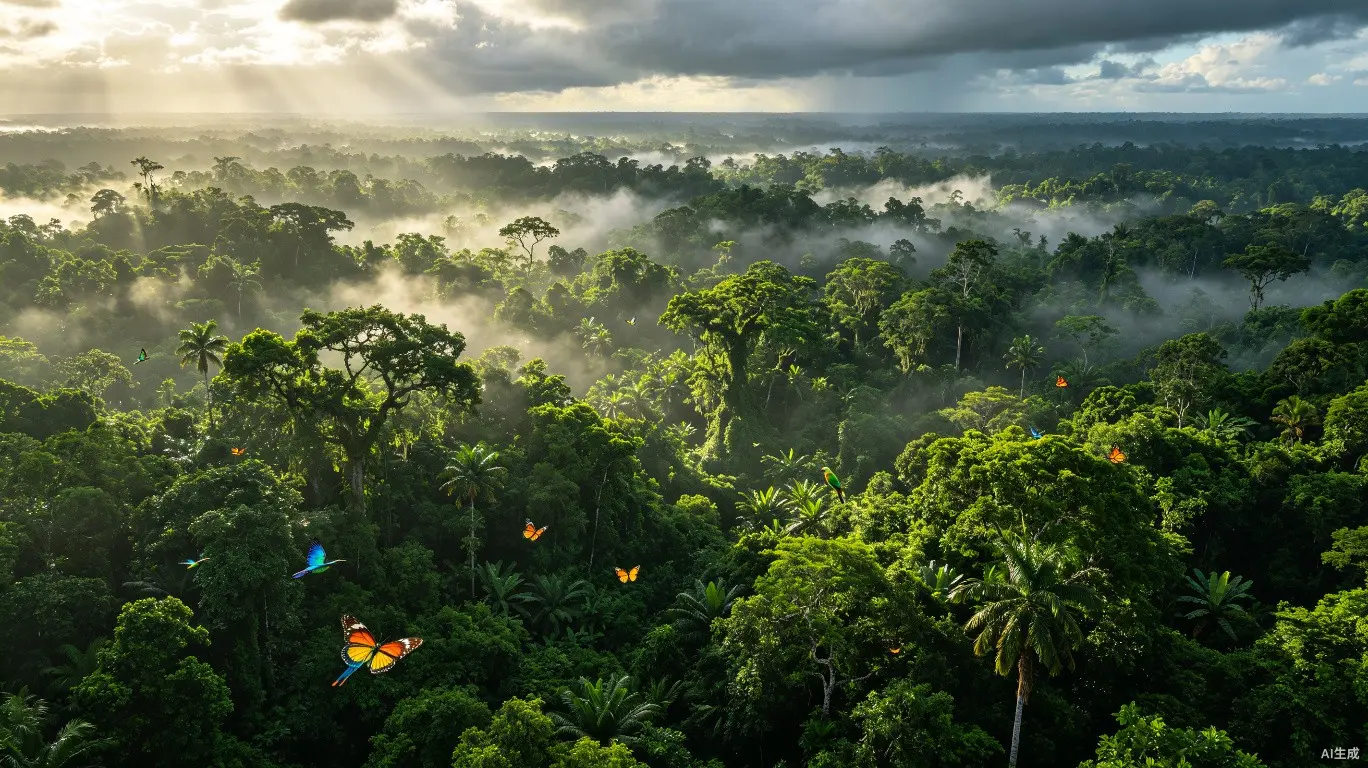
The Amazon rainforest is the most biodiverse terrestrial ecosystem on Earth, yet scientists estimate that vast numbers of species remain undiscovered. Every expedition reveals new forms of life hidden in its dense canopy, winding rivers, and rich soil.
The Amazon rainforest covers approximately 5.5 million square kilometers across nine South American countries, with Brazil containing roughly 60% of the total area. This vast expanse of tropical forest produces about 20% of the world’s oxygen and contains an estimated 10% of all species known to science.
Scientists estimate that a new species is discovered in the Amazon every other day on average. Between 2014 and 2025, researchers documented over 2,200 new species including plants, fish, amphibians, reptiles, birds, and mammals. This remarkable rate of discovery underscores how much of the rainforest’s biodiversity remains unknown.
One of the most surprising recent discoveries is the “zombie frog” (Synapturanus zombie), found in 2024 in the Guyana Shield region. This burrowing amphibian spends most of its life underground and was discovered when researchers heard its distinctive call during heavy rains. Its name comes from researchers having to dig through mud like zombies to find it.
The Amazon canopy, located 30 to 45 meters above the forest floor, harbors an estimated 50% of the rainforest’s biodiversity but remains one of the least explored habitats on Earth. Canopy-dwelling species include hundreds of orchid varieties, countless insects, and mammals like sloths and monkeys that may never descend to the ground.
A 2025 expedition to a remote tepui (tabletop mountain) in the Guyana Highlands discovered seven new frog species and three new plant species in just three weeks. These isolated mountaintop ecosystems function like islands in the sky, where species evolve in isolation for millions of years, producing unique forms found nowhere else on Earth.
The Amazon River system contains more than 3,000 known fish species — more than the entire Atlantic Ocean — and ichthyologists estimate that at least 1,000 additional species await discovery. Recent finds include a vegetarian piranha species and electric eels capable of producing shocks exceeding 800 volts.
In 2023, researchers using environmental DNA (eDNA) techniques identified traces of over 150 vertebrate species in a single liter of Amazon stream water. This non-invasive method, which analyzes genetic material shed by organisms into their environment, is revolutionizing biodiversity surveys and revealing species that evade traditional observation.
The Amazon is home to an estimated 390 billion individual trees belonging to roughly 16,000 species. However, botanists believe many tree species remain undocumented, particularly in the remote Javari Valley near the Brazil-Peru border, which remains one of the largest unexplored forest areas on the continent.
A remarkable fungus discovered in 2024 in the Ecuadorian Amazon was found to consume polyurethane plastic, offering potential applications in bioremediation. Named Pestalotiopsis amazonica, this fungus can survive in anaerobic environments similar to those found at the bottom of landfills, making it a promising candidate for tackling plastic pollution.
Indigenous communities in the Amazon have identified and used thousands of plant species for medicine, food, and materials. Ethnobotanists working with the Yanomami people have documented over 500 medicinal plant species, and many pharmaceutical compounds originally derived from Amazon plants remain essential in modern medicine.
The Amazon’s pink river dolphin (Inia geoffrensis) is one of the few freshwater dolphin species. A 2024 genetic study revealed that the Araguaia river dolphin represents a separate species that diverged over two million years ago, highlighting how much remains unknown even about the rainforest’s larger, more visible animals.
At current deforestation rates, an area of Amazon rainforest roughly the size of a football field is lost every few seconds. Scientists warn that undiscovered species may go extinct before they are ever documented, taking with them potential medical breakthroughs, ecological insights, and irreplaceable pieces of Earth’s evolutionary heritage.