
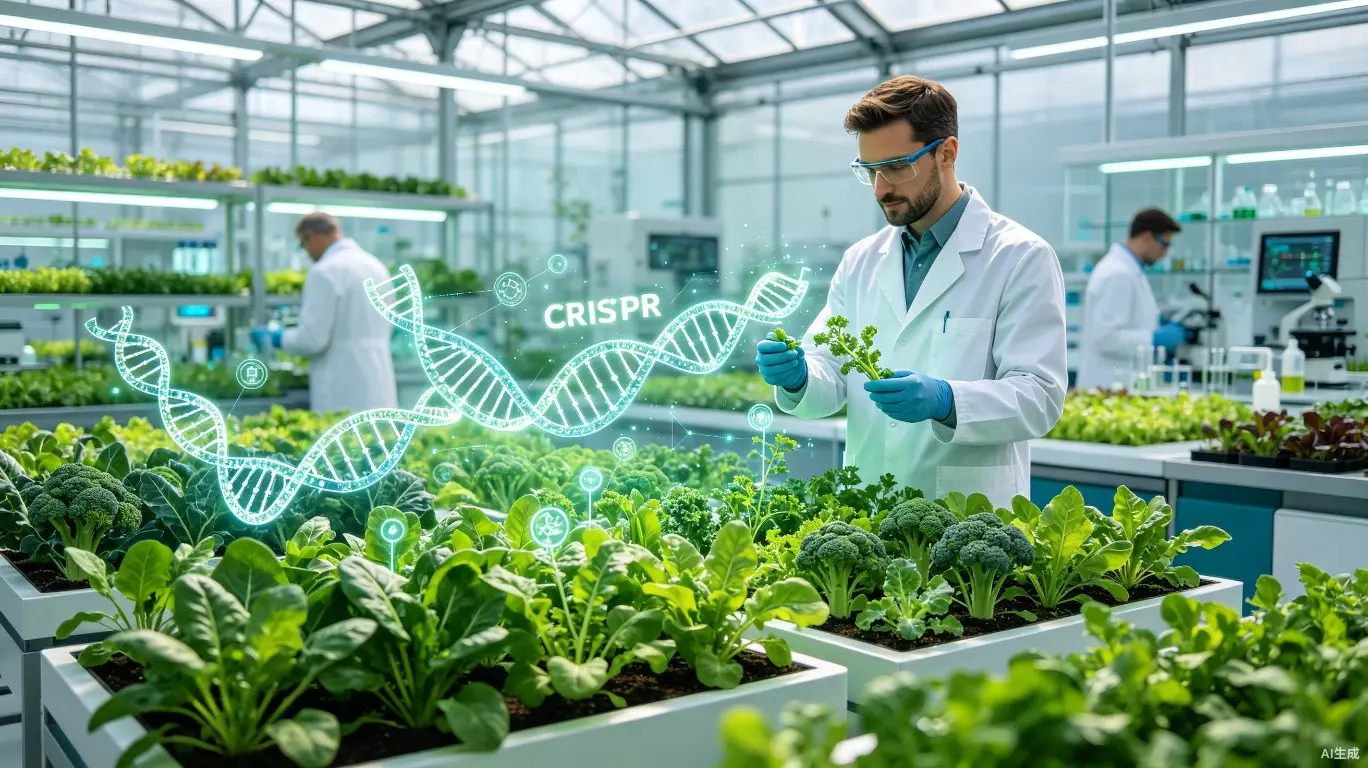
CRISPR gene-editing technology is revolutionizing agriculture, creating crops that resist disease, tolerate drought, and deliver more nutrition. These breakthroughs are reshaping how the world grows food and could prove essential in feeding a global population approaching 10 billion.
CRISPR-Cas9, first adapted for gene editing in 2012, has moved from laboratory curiosity to commercial agricultural reality with breathtaking speed. By 2026, over 25 CRISPR-edited crops have received regulatory approval for commercial cultivation in at least one country, spanning everything from vitamin-enriched tomatoes to disease-resistant wheat varieties that could prevent billions in annual crop losses.
The first CRISPR-edited food to reach the U.S. market was a gamma-aminobutyric acid (GABA)-enriched tomato launched in Japan in 2021 and later approved in the U.S. in 2024. The tomato contains five to six times the normal level of GABA, a compound linked to lower blood pressure and stress reduction, achieved by editing a single gene that normally breaks down GABA during ripening.
In 2025, researchers at the University of California developed a drought-tolerant rice variety using CRISPR to modify the EPFL9 gene, which controls stomatal density on leaves. The edited rice produces 40% more grain under severe drought conditions compared to conventional varieties, while requiring 30% less water under normal conditions -- a dual benefit that could transform agriculture in water-scarce regions.
CRISPR-edited wheat resistant to powdery mildew, a fungal disease that destroys an estimated 10% to 15% of global wheat harvests annually, received commercial approval across multiple countries in 2025. The edit disabled a single gene that the fungus exploits to suppress the plant's immune response, restoring natural resistance without introducing foreign DNA or affecting yield or grain quality.
The first CRISPR-edited banana resistant to Fusarium wilt -- also known as Panama disease TR4, which threatens to wipe out the Cavendish banana that dominates global trade -- showed complete immunity in field trials completed in 2025. Since Cavendish bananas are sterile clones, traditional breeding is impossible, making gene editing the only viable path to disease resistance for the world's most popular fruit.
Gene-edited soybeans with modified fatty acid profiles entered commercial production in 2026, producing oil with 80% less saturated fat and zero trans fats without the hydrogenation process that creates harmful trans fats in conventional soybean oil. The oil maintains the same cooking properties as conventional soybean oil, enabling healthier processed foods without reformulation challenges.
In a breakthrough for food waste reduction, CRISPR-edited mushrooms that resist browning for up to two weeks after cutting reached supermarkets in 2025. By editing a single gene in the polyphenol oxidase family -- the same enzyme that causes apples and avocados to brown -- the mushrooms maintain fresh appearance far longer, potentially reducing the estimated 30% of produce that is discarded due to cosmetic imperfections.
CRISPR-edited cocoa plants resistant to cocoa swollen shoot virus, which destroys an estimated 15% to 20% of West African cocoa harvests, showed complete immunity in field trials completed in early 2026. The edit targeted a plant gene that the virus requires to replicate, effectively creating a non-GMO solution to a disease that has devastated the livelihoods of millions of smallholder farmers.
Vitamin D-enriched tomatoes created by editing a single gene that normally converts provitamin D3 into cholesterol were approved in the UK in 2025. Two of these edited tomatoes provide the recommended daily intake of vitamin D, offering a plant-based solution to vitamin D deficiency that affects approximately one billion people worldwide.
Nitrogen-efficient rice developed through CRISPR editing of the OsNRT1.1B gene showed a 30% increase in yield at half the normal nitrogen fertilizer application rate in major field trials across Asia. If widely adopted, this single innovation could reduce global nitrogen fertilizer use by millions of tons annually while maintaining or increasing rice production.
The regulatory landscape for gene-edited crops has diverged significantly by region. The U.S., Japan, Brazil, and Argentina treat simple gene edits without foreign DNA insertion as equivalent to conventional breeding and require no special labeling or safety testing beyond standard variety registration. The European Union, after years of debate, adopted a more permissive framework in 2025 for certain categories of gene-edited crops, though they remain subject to labeling and traceability requirements.
Beyond staple crops, CRISPR is being deployed to save threatened crop wild relatives and heirloom varieties. In 2026, researchers successfully edited genes conferring disease resistance from wild tomato relatives directly into heirloom tomato varieties, preserving their unique flavor and appearance while adding the resilience of their wild cousins -- an approach that combines the best of traditional breeding and modern biotechnology.