
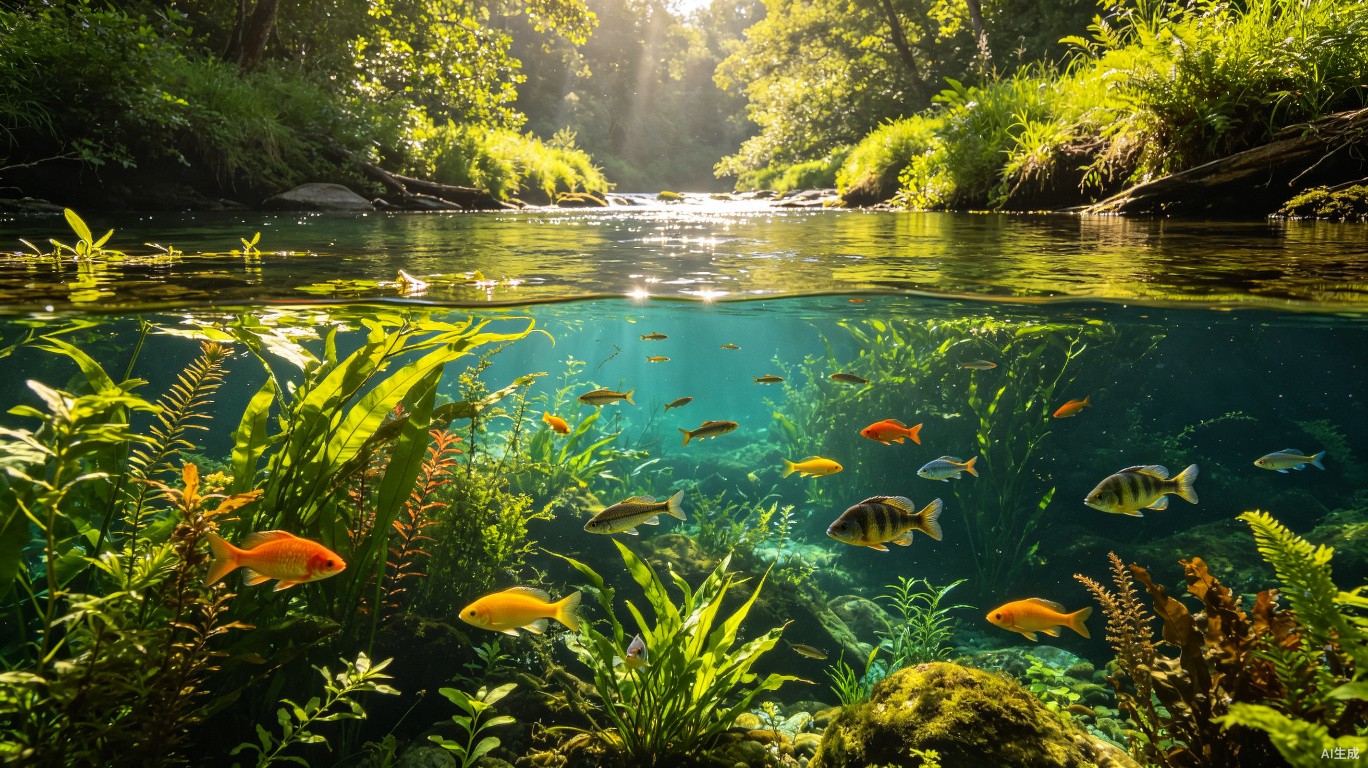
Freshwater ecosystems cover less than one percent of Earth's surface yet support more than ten percent of all known species. From hidden underground aquifers to vast tropical wetlands, these aquatic worlds are teeming with life forms that have evolved remarkable adaptations to thrive in rivers, lakes, and streams across the planet.
The Amazon River Basin contains the highest freshwater biodiversity on Earth, with over 3,000 recognized fish species — more than the entire Atlantic Ocean. New species are discovered there at a rate of roughly one every three days, including electric eels, vampire fish, and piranhas with vegetarian diets that feed on fallen fruit.
Lake Baikal in Siberia is the world's oldest and deepest freshwater lake, holding approximately 20 percent of the planet's unfrozen surface freshwater. Over 80 percent of its 2,500-plus animal species are endemic, meaning they exist nowhere else on Earth, including the Baikal seal, the only exclusively freshwater seal species.
Freshwater mussels are among the most imperiled groups of organisms on Earth, yet they serve as nature's water filtration systems. A single adult mussel can filter up to 57 liters of water per day, removing algae, bacteria, and suspended particles while cleaning entire river systems over their decades-long lifespans.
The African Great Lakes — Victoria, Tanganyika, and Malawi — together hold nearly 2,000 species of cichlid fish, almost all of which evolved within the lakes themselves. This explosive adaptive radiation occurred in some cases within just 15,000 years, making these lakes natural laboratories for studying evolution in real time.
Dragonflies and damselflies spend the majority of their lives as aquatic nymphs underwater, with some species remaining in this stage for up to five years before emerging as flying adults for just a few weeks. Their nymphs are voracious predators that can shoot their extendable lower jaw forward to capture prey at lightning speed.
The Mekong River supports the largest inland fishery in the world, providing protein for over 60 million people across six countries. It is home to the critically endangered Irrawaddy dolphin and the giant freshwater stingray, which can weigh over 600 kilograms and ranks among the largest freshwater fish on Earth.
Freshwater jellyfish, found in lakes and calm rivers across every continent except Antarctica, are believed to have originated in China's Yangtze River Basin. These tiny, translucent medusae measure less than 25 millimeters in diameter and possess stinging cells too small to harm humans but effective against microscopic prey.
Beavers are ecosystem engineers whose dam-building activities create wetlands that support hundreds of other species. A single beaver pond can increase local biodiversity by up to 50 percent, providing habitat for amphibians, waterfowl, fish, and countless invertebrates while also recharging groundwater and reducing downstream flooding.
Hellbender salamanders, North America's largest amphibians reaching lengths of over 70 centimeters, breathe entirely through the loose, wrinkled folds of skin along their bodies. They require exceptionally clean, fast-flowing streams with high oxygen levels, making their presence a powerful indicator of healthy freshwater ecosystems.
The annual flooding of the Pantanal, the world's largest tropical wetland spanning Brazil, Bolivia, and Paraguay, transforms grasslands into a vast shallow sea covering up to 200,000 square kilometers. This seasonal pulse drives one of the greatest concentrations of wildlife on the continent, including jaguars that have uniquely adapted to hunt fish and caiman in the floodwaters.
Archerfish hunt insects by shooting precisely aimed jets of water from their mouths, knocking prey from overhanging vegetation into the water. Remarkably, these fish can calculate the refraction of light at the water's surface and adjust their aim accordingly, hitting targets up to two meters away with surprising accuracy.