
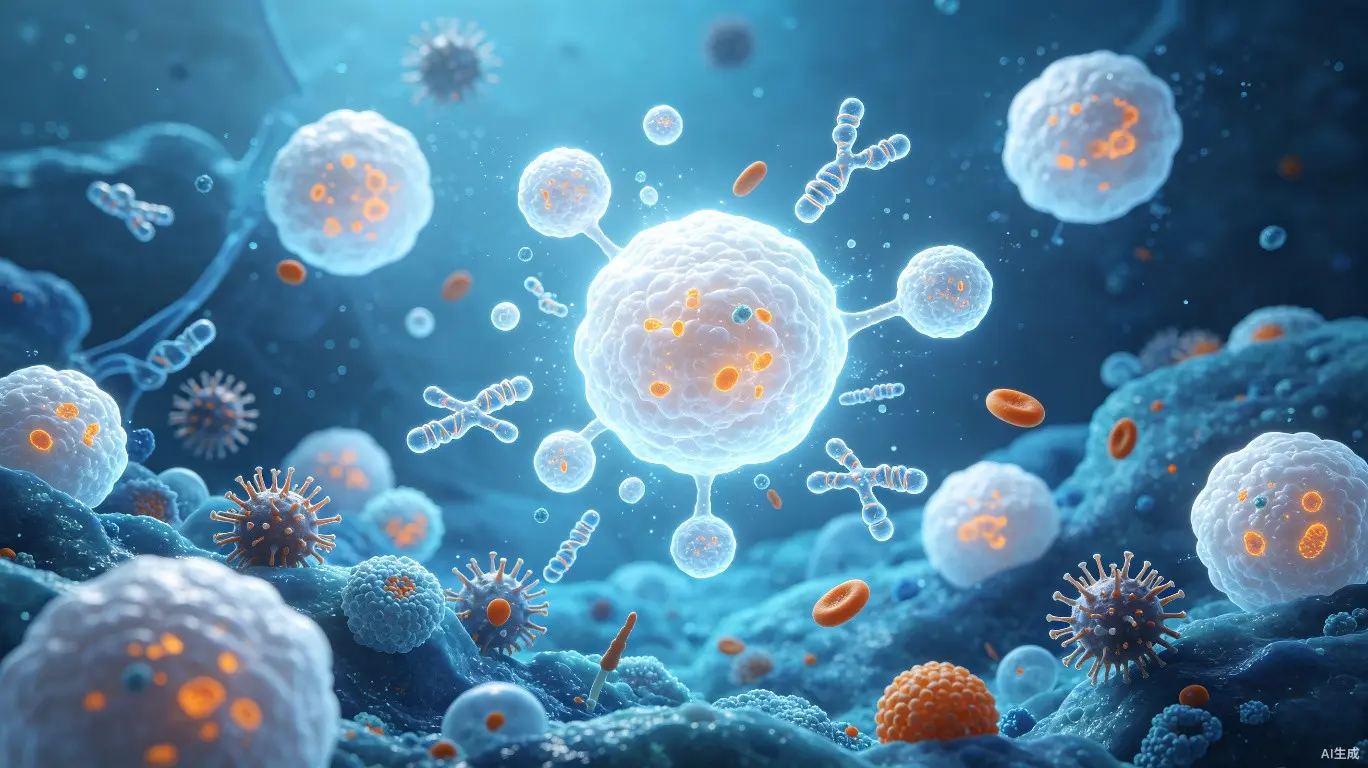
The human immune system is one of the most complex and remarkable defense networks in nature. It remembers every pathogen it has ever encountered, deploys specialized cells that can target specific invaders with molecular precision, and operates largely without our conscious awareness -- until something goes wrong.
The human immune system is composed of an estimated 1.8 trillion cells, weighing approximately 1 to 1.3 kilograms in total -- making it one of the largest organ systems in the body by mass. The bone marrow alone produces roughly 500 billion new immune cells every single day, a production rate comparable to the total number of stars in several galaxies.
Immunological memory is one of the immune system's most extraordinary capabilities. After encountering a pathogen -- either through infection or vaccination -- specialized memory B and T cells can persist in the body for decades, sometimes for an entire lifetime. When the same pathogen is encountered again, these memory cells mount a response within hours instead of the days or weeks required for a first-time response.
The measles virus has a unique and devastating ability to erase immunological memory. Research published in 2019 and confirmed in subsequent studies shows that a measles infection can destroy 11% to 73% of a person's existing antibody repertoire, effectively resetting the immune system's memory of all previous infections and vaccinations. This "immune amnesia" can last for two to three years after infection and explains why measles vaccination dramatically reduces mortality from all infectious causes combined.
The gut microbiome -- the community of trillions of bacteria, viruses, and fungi living in the digestive tract -- plays a critical role in training and regulating the immune system. Approximately 70% of the body's immune cells reside in gut-associated lymphoid tissue, where they learn to distinguish between harmless food proteins and benign microbes (which should be tolerated) and dangerous pathogens (which must be attacked).
Natural killer (NK) cells are the immune system's first responders, capable of identifying and destroying virus-infected cells and cancer cells within minutes of encounter -- without any prior exposure or training. Unlike T cells and B cells, NK cells do not require antigen presentation and act through a balance of activating and inhibitory receptors that constantly scan every cell they encounter for signs of distress or abnormality.
The thymus, a small gland located behind the breastbone, is where T cells -- named for Thymus-derived cells -- are educated. In a process of extreme quality control, roughly 98% of developing T cells are eliminated during this education process because they either fail to recognize the body's own cells (useless) or attack them too aggressively (dangerous). Only about 2% of T cells survive this selection to enter circulation.
Autoimmune diseases occur when the immune system mistakenly identifies the body's own tissues as foreign and mounts an attack against them. There are more than 80 known autoimmune diseases affecting an estimated 5% to 10% of the global population. The prevalence of autoimmune diseases has been increasing in industrialized countries by 3% to 9% per year, a trend partly attributed to the "hygiene hypothesis" -- the idea that reduced exposure to microbes in early childhood may lead to improper immune regulation.
Fever is not a malfunction but an evolved defense mechanism. Raising the body temperature by just a few degrees can inhibit the replication of many pathogens while simultaneously accelerating the activity of immune cells. The metabolic cost is enormous -- each 1-degree-Celsius increase in body temperature raises metabolic rate by approximately 10% to 13%. The body's deliberate choice to generate fever, despite this massive energy expenditure, underscores its evolutionary value in fighting infection.
The immune system possesses a remarkable ability to distinguish between the body's approximately 37 trillion "self" cells and the vastly larger number of "non-self" microbes that colonize or invade the body. This discrimination relies on a system of protein fragments called major histocompatibility complex (MHC) molecules that every cell displays on its surface like an identification badge, constantly presenting samples of the proteins being produced inside that cell for immune surveillance.
Cancer immunotherapy, which harnesses the immune system to fight tumors, has become one of the most promising frontiers in oncology. CAR-T cell therapy involves extracting a patient's own T cells, genetically engineering them to recognize cancer cells, and reinfusing them. In some blood cancers, a single infusion of CAR-T cells has produced complete remission in patients who had exhausted all other treatment options.
Pregnancy presents a unique immunological puzzle: the fetus carries foreign genetic material from the father, yet the mother's immune system must not only tolerate but actively support its development for nine months. The placenta creates a specialized immunological barrier that suppresses local immune responses while maintaining systemic immunity against infections. A better understanding of this natural immunosuppression could lead to improved treatments for autoimmune diseases and improved transplantation tolerance.
The immune system follows a circadian rhythm, with different components peaking in activity at different times of day. Pro-inflammatory responses are generally strongest during the day (when pathogen encounters are most likely), while anti-inflammatory and repair processes dominate at night. This has practical implications: vaccines administered in the morning tend to produce stronger antibody responses than those given in the afternoon, and the timing of immunotherapy treatments can significantly affect their efficacy.
In 2025, researchers successfully trained the human immune system to recognize and attack the amyloid-beta plaques characteristic of Alzheimer's disease using a novel vaccine approach. While still in early clinical trials, immunizing the body against its own misfolded proteins -- a strategy being pursued for multiple neurodegenerative diseases -- represents one of the most exciting and challenging frontiers in immunological research.