
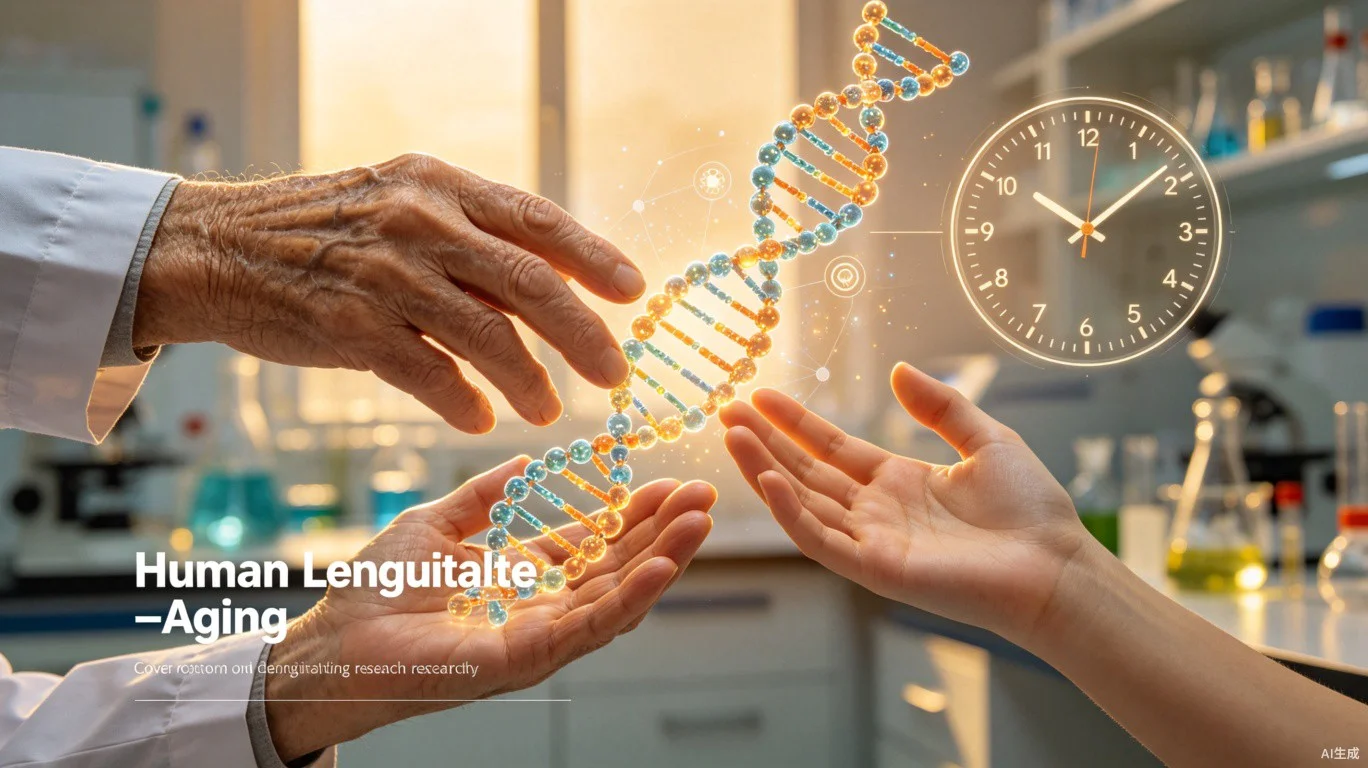
Scientists are unraveling the biological mechanisms of aging, opening the door to interventions that could dramatically extend healthy human lifespan.
The global anti-aging and longevity market is projected to exceed $80 billion by 2030, driven by advances in genetics, biotechnology, and artificial intelligence. Longevity research has shifted from fringe science to a mainstream field attracting billions in investment from tech billionaires, pharmaceutical companies, and governments worldwide.
Telomeres — protective caps at the ends of chromosomes — shorten each time a cell divides, essentially serving as a cellular aging clock. When telomeres become critically short, cells enter senescence or die. The 2009 Nobel Prize in Physiology was awarded for the discovery of telomerase, an enzyme that can extend telomeres and potentially slow cellular aging.
Cellular senescence is now recognized as a primary driver of aging. Senescent cells — sometimes called "zombie cells" — stop dividing but do not die, instead secreting inflammatory molecules that damage surrounding healthy tissue. Senolytic drugs that selectively eliminate senescent cells have shown remarkable results in animal studies, reversing age-related conditions including cataracts, kidney disease, and frailty.
Caloric restriction without malnutrition is the most consistently demonstrated intervention for extending lifespan across species, from yeast to primates. The CALERIE human trial showed that reducing calorie intake by 12% over two years slowed biological aging by 2-3% as measured by DNA methylation clocks, reduced inflammation markers, and improved cardiovascular health.
The drug metformin, used for decades to treat type 2 diabetes, has emerged as a promising longevity molecule. Epidemiological studies show that diabetics taking metformin live longer than non-diabetics not taking the drug. The TAME (Targeting Aging with Metformin) trial, launched in 2025, is the first study designed to test whether a drug can delay the onset of all age-related diseases simultaneously rather than treating them individually.
Epigenetic clocks, developed by Steve Horvath and others, can accurately estimate biological age from DNA methylation patterns. These clocks have revealed that biological age can be younger or older than chronological age, and that interventions like diet, exercise, and certain drugs can slow or even reverse epigenetic aging. The GrimAge clock can predict lifespan and healthspan with remarkable accuracy from a simple blood sample.
Partial cellular reprogramming using Yamanaka factors — the same proteins that can turn adult cells into stem cells — has shown the potential to rejuvenate tissues without causing cancer. In 2020, David Sinclair's lab at Harvard demonstrated that expressing three of the four Yamanaka factors in mice restored vision in old animals and reversed age-related changes in multiple organs.
NAD+ is a coenzyme essential for cellular energy production and DNA repair, but its levels decline by up to 50% with age. Supplementation with NAD+ precursors like nicotinamide riboside (NR) and nicotinamide mononucleotide (NMN) has been shown to improve mitochondrial function, cognitive performance, and physical endurance in animal studies. Human clinical trials are underway, with early results showing modest but measurable benefits.
The discovery of "super-agers" — individuals over 80 with the cognitive function of people decades younger — has provided clues about successful aging. Brain scans of super-agers reveal thicker cerebral cortices, fewer tau tangles, and higher density of von Economo neurons, which are associated with social intelligence. Genetics, lifelong learning, social engagement, and regular physical exercise all appear to contribute to super-ager status.
Blood-based biomarkers of aging are becoming powerful tools for measuring biological age. In 2024, researchers developed a blood test that measures levels of hundreds of proteins to produce a "proteomic age" score. People with proteomic ages higher than their chronological age had significantly increased risk of age-related diseases and mortality, independent of other risk factors.
The concept of "healthspan" — the period of life spent in good health — has overtaken lifespan as the goal of longevity research. Simply extending life without preserving health would be a medical and societal disaster. The ultimate aim of modern longevity science is to compress morbidity, ensuring that people remain healthy and functional until very near the end of life, regardless of how long that life extends.