
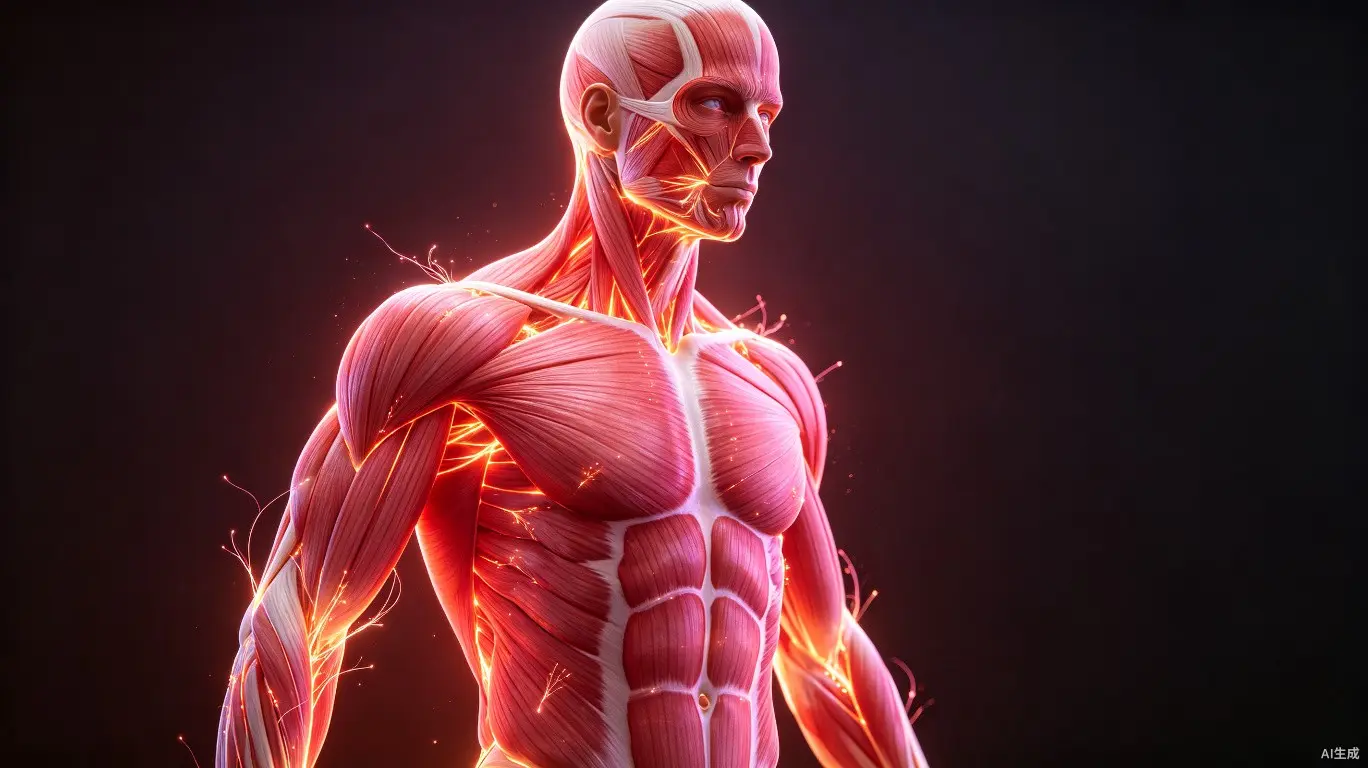
The human muscular system is a marvel of biological engineering, with over 600 muscles working in concert to produce every movement, from blinking to sprinting. These facts reveal the extraordinary capabilities and hidden design of the muscles we use every day.
The human body contains over 600 skeletal muscles, which account for approximately 40% of total body weight in a healthy adult. These muscles range from the tiny stapedius in the middle ear, measuring just over 1 millimeter, to the gluteus maximus, the largest muscle in the body responsible for maintaining upright posture.
The strongest muscle in the human body, relative to its size, is the masseter, or jaw muscle. It can exert a bite force of up to 200 pounds (890 newtons) on the molars, which, when scaled for size, makes it the most powerful muscle by unit of cross-sectional area. The tongue, composed of eight intertwined muscles, is often cited as the most versatile muscle group.
Muscles can only pull, never push. Every movement you make results from muscles contracting and pulling on bones via tendons. When you extend your arm, the triceps muscle contracts and pulls while the biceps relaxes. This antagonistic pairing of muscles is a fundamental design principle of the musculoskeletal system.
The heart is technically a muscle — cardiac muscle — and is the hardest-working muscle in the body. Over an average lifetime, the human heart beats approximately 2.5 to 3 billion times, pumping about 200 million liters of blood. Unlike skeletal muscles, cardiac muscle never tires and cannot be voluntarily controlled.
Muscle memory is a real neurological phenomenon. When you repeatedly practice a movement, the neural pathways that control that movement become more efficient. The brain creates stronger connections between motor neurons and muscles, allowing movements to become automatic. This is why skills like playing piano or riding a bicycle persist even after years without practice.
Smooth muscles, which line the walls of hollow organs like the intestines, blood vessels, and bladder, operate completely involuntarily. These muscles work continuously without conscious control, propelling food through the digestive tract in rhythmic waves called peristalsis, which occurs roughly every 15 to 30 seconds in the small intestine.
Muscle tissue is one of the most metabolically active tissues in the body. Even at rest, each pound of muscle burns approximately 6 to 7 calories per day just to maintain itself, compared to about 2 calories per pound for fat tissue. This is why increasing muscle mass through strength training raises the body’s resting metabolic rate.
The smallest skeletal muscle in the human body is the stapedius, located in the middle ear. Measuring only about 1 millimeter in length, it stabilizes the stapes bone, which transmits sound vibrations to the inner ear. When the stapedius contracts in response to loud sounds, it dampens vibrations and protects the inner ear from damage.
Humans are remarkably efficient at long-distance running compared to most animals, thanks partly to muscle fiber composition. Human leg muscles contain a high proportion of slow-twitch muscle fibers optimized for endurance and energy efficiency. Combined with our ability to sweat for cooling, humans can outrun almost any animal over sufficiently long distances in hot conditions.
Muscle cramps are often caused by dehydration, electrolyte imbalances, or muscle fatigue. When a muscle cramps, the motor neurons controlling it fire rapidly and repeatedly, causing sustained involuntary contraction. Despite being extremely painful, most cramps are harmless and can be relieved by gentle stretching and hydration.
Astronauts in microgravity can lose up to 20% of their muscle mass in just 5 to 11 days without exercise. This rapid muscle atrophy occurs because muscles no longer need to work against gravity. Astronauts on the International Space Station exercise approximately two hours daily using specialized resistance equipment to combat this muscle and bone loss.