
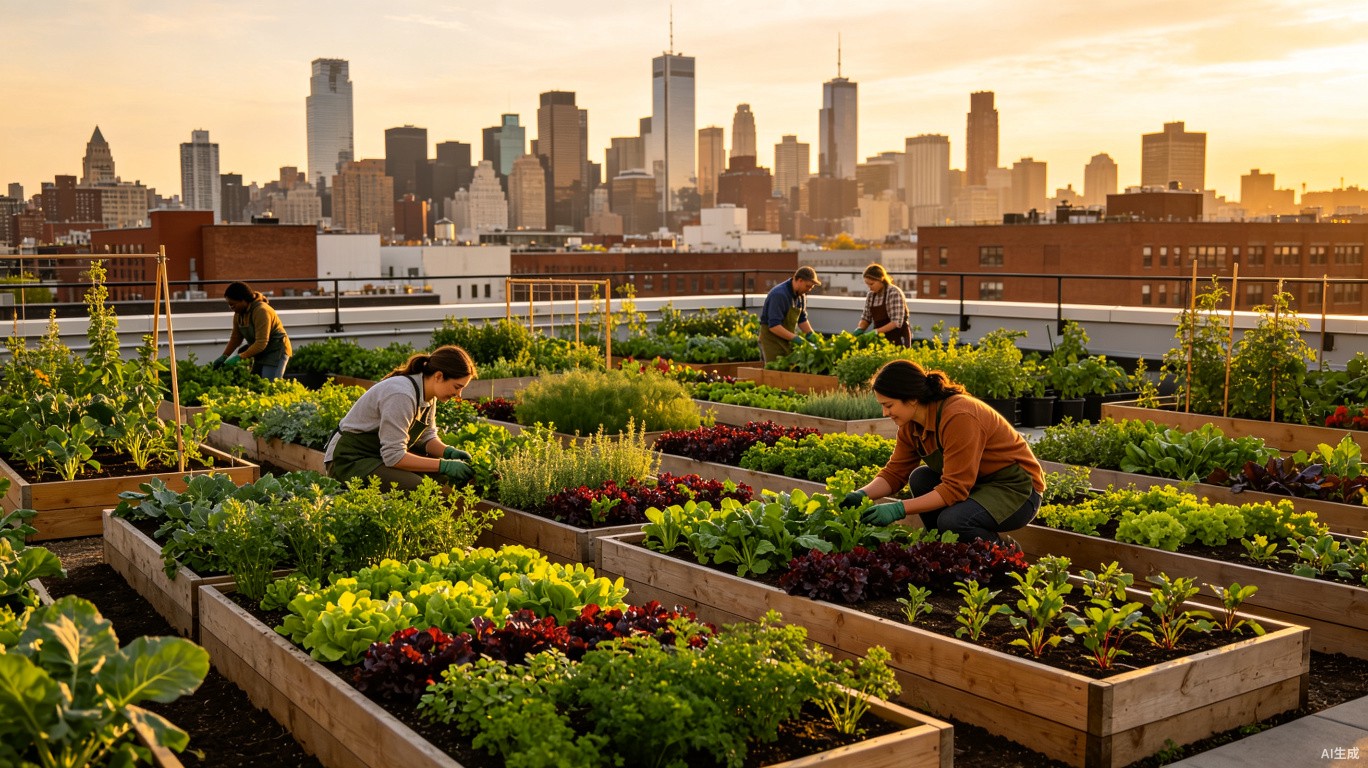
Across the globe, urban farming is reshaping how city dwellers think about food, community, and sustainability. From rooftop gardens and vertical farms to community plots and aquaponics systems, growing food within city limits is addressing food security, environmental concerns, and the human need for connection to nature.
Vertical farming uses stacked growing layers in controlled indoor environments to produce crops year-round, independent of weather and seasons. A single vertical farm facility can produce the equivalent of up to 700 acres of traditional farmland using 95 percent less water and without any pesticides or herbicides.
During World War II, victory gardens in the United States produced roughly 40 percent of the nation's fresh vegetables at their peak. Over 20 million American families participated, demonstrating that urban food production at massive scale is not only possible but has already succeeded.
An estimated 15 to 20 percent of the world's food is now grown in urban areas, according to the United Nations Food and Agriculture Organization. In cities like Havana, Cuba, urban farms and gardens produce more than 60 percent of the fresh produce consumed by residents.
Rooftop gardens reduce a building's energy consumption significantly by providing natural insulation. A green roof can lower indoor temperatures by up to 4 degrees Celsius during summer, reducing air conditioning needs while simultaneously mitigating the urban heat island effect that makes cities several degrees hotter than surrounding rural areas.
Aquaponics combines fish farming with plant cultivation in a closed-loop system where fish waste provides nutrients for plants, and the plants filter the water for the fish. A well-designed aquaponics system uses 90 percent less water than conventional soil farming and can be built in warehouses, basements, or shipping containers.
Community gardens measurably reduce crime rates in surrounding neighborhoods. A study in Philadelphia found that greening vacant lots — including creating community gardens — was associated with significant reductions in gun violence, vandalism, and overall crime rates across multiple years of observation.
Paris has embraced urban farming with its Parisculteurs initiative, aiming to cover 100 hectares of the city's rooftops and walls with vegetation, one-third dedicated to food production. The city's largest urban farm, located atop the Paris Expo Porte de Versailles, spans 14,000 square meters and produces more than 1,000 varieties of fruits and vegetables.
Microgreens — young vegetable greens harvested just 7 to 21 days after germination — have become a popular urban farming crop because they grow quickly in minimal space under artificial light. Research shows microgreens can contain up to 40 times the nutrient density of their mature counterparts, delivering concentrated vitamins and antioxidants in tiny packages.
Singapore, with limited land but ambitious food security goals, aims to produce 30 percent of its nutritional needs locally by 2030 under its "30 by 30" initiative. The city-state has invested heavily in high-tech vertical farms, rooftop agriculture, and even floating solar-powered farms off its coastline.
The act of gardening has been linked to significant mental health benefits regardless of scale. Studies show that working with soil exposes people to Mycobacterium vaccae, a bacterium that triggers serotonin release in the brain, while the combination of physical activity, sunlight, and nurturing living plants reduces cortisol levels and symptoms of depression and anxiety.