
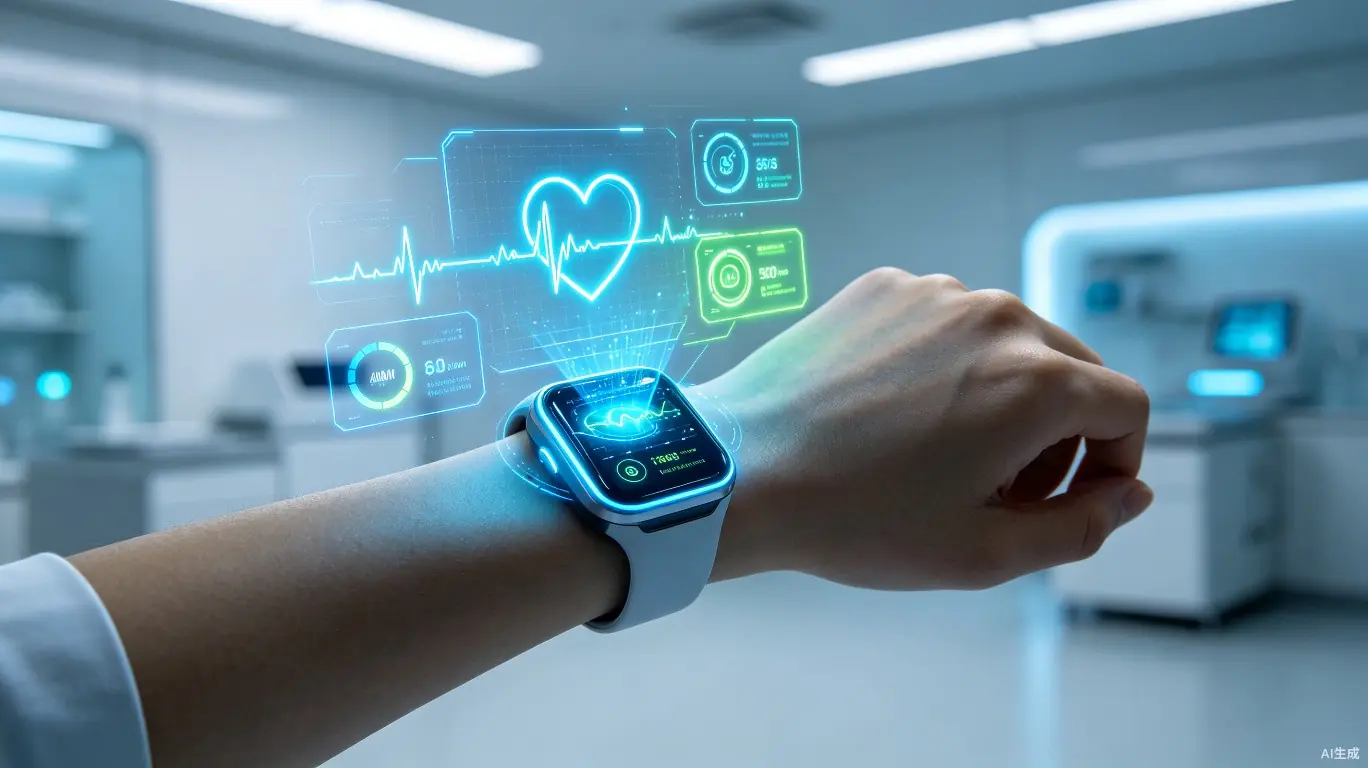
Wearable health technology has evolved from simple step counters into sophisticated medical-grade devices that monitor heart rhythms, blood chemistry, sleep patterns, and even early signs of disease. These innovations are shifting healthcare from reactive treatment toward continuous, preventive monitoring.
Modern smartwatches can now detect atrial fibrillation with over 98% accuracy using photoplethysmography sensors that measure blood volume changes through the skin. The Apple Watch's ECG app received FDA clearance as a Class II medical device in 2018, and since then millions of users have received alerts about irregular heart rhythms that led to confirmed diagnoses and life-saving interventions.
Continuous glucose monitors, originally developed for diabetes management, are now being adopted by health-conscious consumers seeking to optimize their metabolic health. Devices like the Dexcom G7 and Abbott Freestyle Libre 3 provide real-time blood glucose readings every minute through a tiny subcutaneous filament, revealing how individual foods, exercise, and stress uniquely affect blood sugar levels.
Smart ring technology has advanced dramatically, with devices like the Oura Ring Gen 4 and Samsung Galaxy Ring packing temperature sensors, infrared PPG sensors, and accelerometers into a form factor weighing under 4 grams. These rings track overnight skin temperature variations with precision down to 0.13 degrees Celsius, enabling early detection of illness before symptoms appear.
Wearable blood pressure monitors have achieved clinical validation without requiring a traditional inflatable cuff. Devices using pulse transit time and pulse wave analysis, such as the Omron HeartGuide and Aktiia bracelet, calculate blood pressure by measuring the time it takes for a pulse wave to travel between two arterial sites, providing continuous 24-hour ambulatory monitoring.
Sweat analysis wearables represent a major frontier in non-invasive health monitoring. In 2025, researchers demonstrated a flexible microfluidic patch that continuously analyzes sodium, chloride, potassium, glucose, lactate, and cortisol levels in sweat, transmitting data wirelessly to a smartphone. This technology could eventually replace many blood tests for monitoring hydration, electrolyte balance, and stress hormones.
Sleep tracking has evolved beyond simple movement detection to comprehensive polysomnography-level monitoring at home. The latest wearable EEG headbands, such as Dreem and Muse S, use dry electrode sensors to capture actual brainwave activity during sleep, distinguishing REM, deep sleep, and light sleep stages with accuracy comparable to clinical sleep laboratory equipment.
Smart clothing with embedded textile sensors is entering mainstream markets, with shirts that monitor heart rate, breathing rate, and posture through conductive fibers woven directly into the fabric. Companies like Hexoskin and Nanowear have developed machine-washable garments capable of continuous multi-lead ECG monitoring for up to 48 hours on a single charge, used by professional sports teams and cardiac rehabilitation programs.
Hearing aid technology has undergone a revolution with the introduction of over-the-counter hearing aids and AI-enhanced devices that double as health monitors. Modern hearing aids can detect falls through built-in accelerometers, monitor social engagement patterns as cognitive health indicators, and even translate languages in real time while simultaneously functioning as sophisticated sound processors.
Smart contact lenses are progressing from concept to reality, with researchers demonstrating lenses incorporating micro-LED displays, glucose sensors that measure tear fluid composition, and intraocular pressure monitors for glaucoma detection. Mojo Vision's prototype lens uses a micro-display with 14,000 pixels per inch to project augmented reality information directly onto the retina.
Wearable UV exposure monitors have become increasingly sophisticated, with multi-spectral sensors capable of distinguishing UVA, UVB, and UVC radiation while tracking cumulative daily exposure. These devices, often integrated into clip-on sensors or smartwatch bezels, provide personalized sun safety recommendations based on skin type, location, and time of day.
Implantable wearables are moving beyond pacemakers, with bio-integrated sensors that dissolve harmlessly in the body after completing their monitoring period. In 2025, Northwestern University researchers demonstrated a wireless, battery-free implant half the width of a human hair that monitors intracranial pressure and temperature for 30 days before safely biodegrading, eliminating the need for surgical removal.
The integration of AI with wearable data has become healthcare's most promising frontier. In a landmark 2025 study published in Nature Medicine, machine learning models trained on over 5 million person-years of wearable sensor data from fitness trackers successfully predicted respiratory infections, including COVID-19, an average of 2.7 days before the wearer reported any symptoms, enabling pre-symptomatic intervention.